
Measure the G-forces before your customer does
Drop, vibration and impact tests with accelerometers that show how your packaging performs, so you ship with evidence instead of hope.
What is packaging drop and vibration testing?
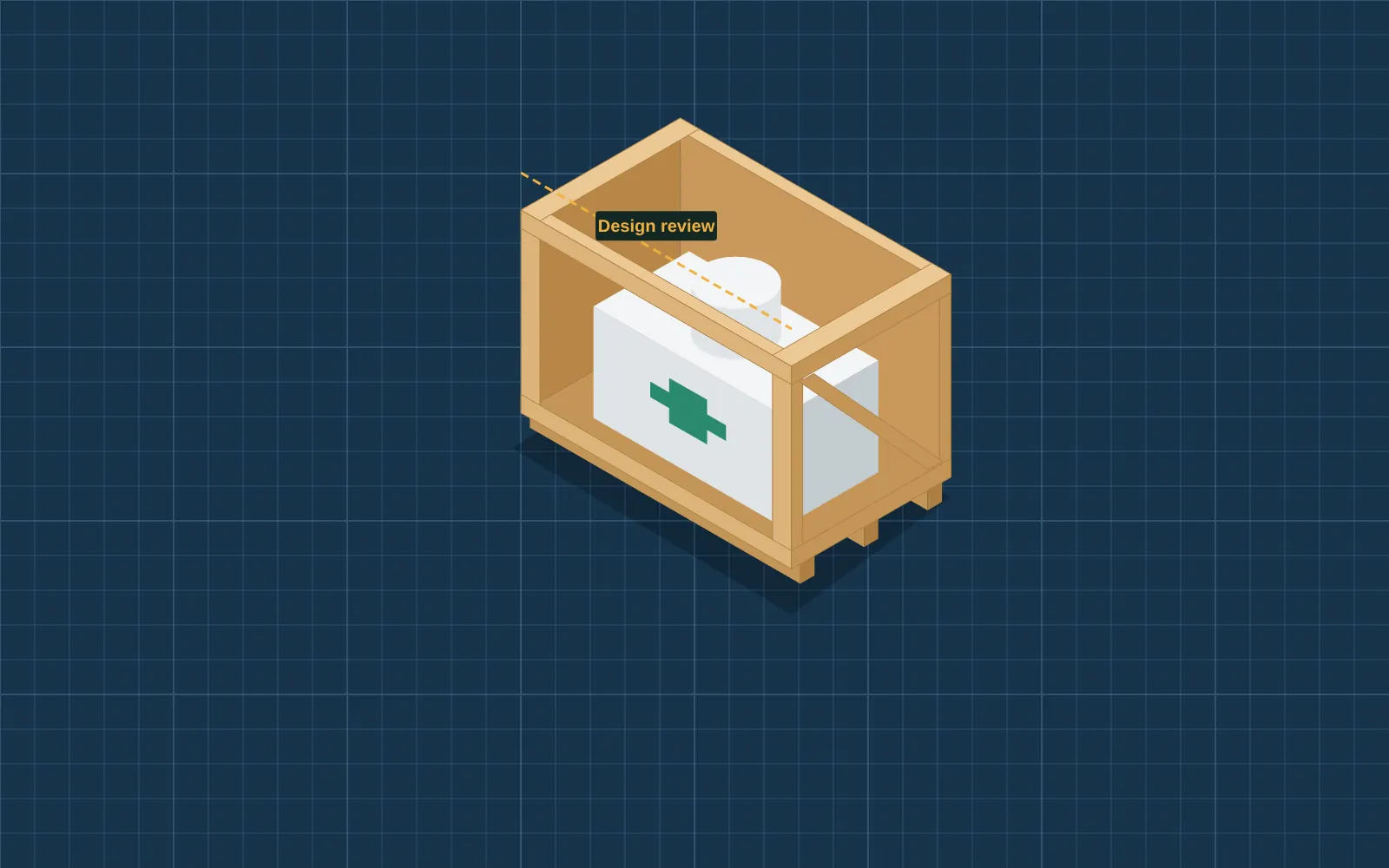
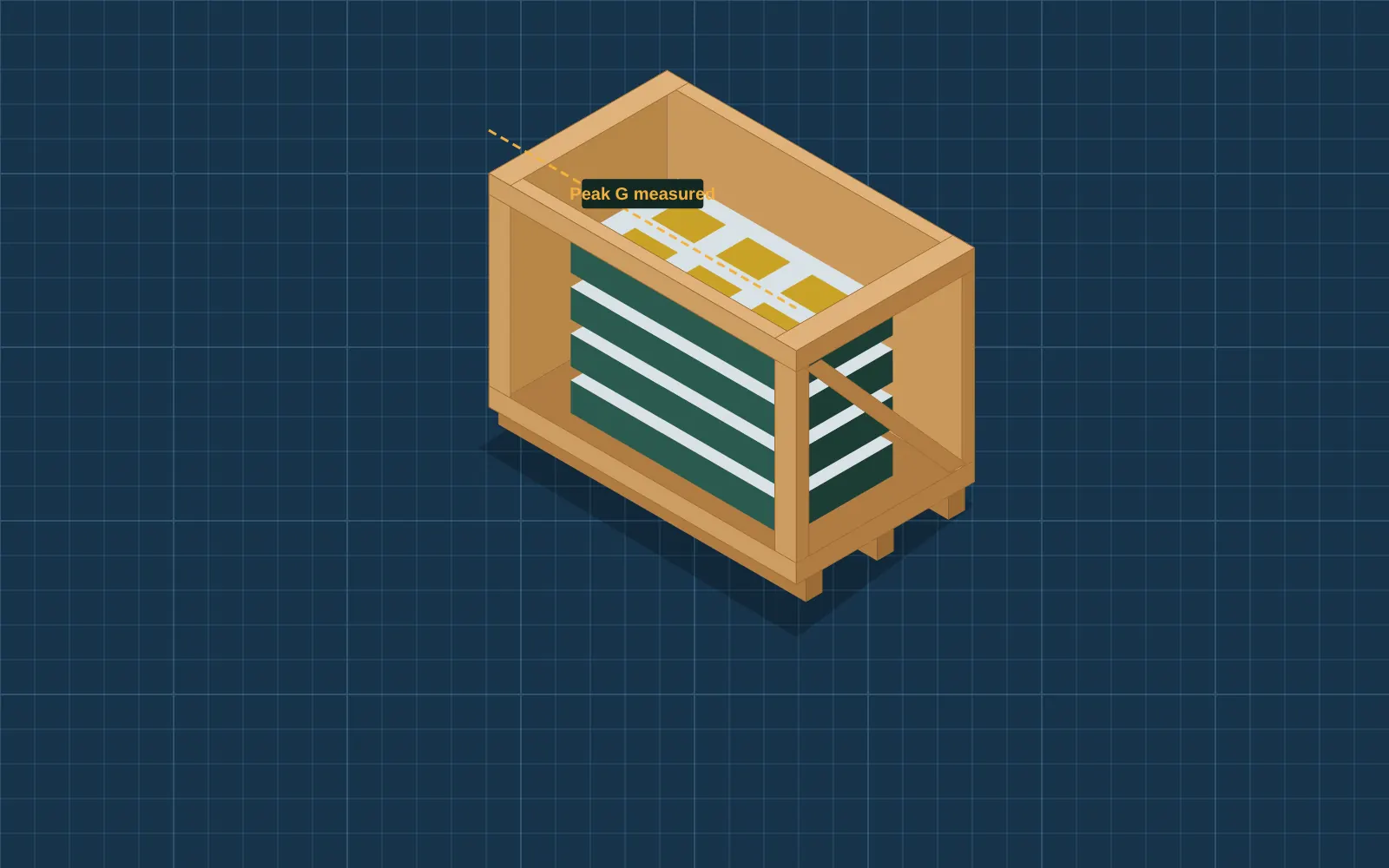
Packaging drop and vibration testing simulates the hazards of shipping in a controlled way. Drop tests release the package from defined heights onto faces, edges and corners; vibration tests reproduce truck, rail or air vibration; impact tests measure shocks. Accelerometers record the G-forces reaching the product, showing whether the packaging keeps them below the product's fragility limit.
Every package is designed on assumptions about drop heights, vibration and handling. Testing replaces assumptions with measurements. It shows whether a cushion bottoms out, whether a crate's fasteners loosen under vibration, and whether the product sees forces it cannot tolerate. It also gives you documentation for customers and quality systems.
Free-fall drops on faces, edges and corners from heights based on package weight and handling.
Simulated transport vibration to find resonance, fastener loosening and abrasion.
Accelerometers mounted on the product record peak G and pulse duration during drops and impacts.
Load tests that check whether a package survives warehouse stacking and trailer loads.
Test plans are modeled on established procedures such as ISTA test series and ASTM D4169, or on your customer's requirements. We agree on the test sequence, levels and pass/fail criteria before testing begins.
Medical device, semiconductor, aerospace and electronics manufacturers, and anyone validating a new engineered package.
That is the product's fragility, usually expressed as a critical G level. It can come from product specifications, manufacturer data or fragility testing. We design cushioning to keep transmitted shock below it.
Our test plans can be modeled on ISTA and ASTM D4169 procedures. If you need formal certification from an accredited ISTA lab, tell us and we will plan accordingly.
Yes. Testing current packaging is a good first step when you have damage problems.
We analyze the failure, recommend design changes, prototype the revision and retest.
Testing large crates is planned case by case, often focusing on handling impacts and vibration with instrumented loads.
Yes. You receive a report with the test plan, data, photos and results.
Send photos, dimensions, weight and the destination. We confirm handling points, fragility and any export or spec requirements.
We size the crate, choose lumber, plywood, foam and barrier materials, and plan blocking, bracing and skids around the load.
The crate is cut and assembled in our shop or at your dock, with fit checks, fastener and skid sizing matched to the weight.
Your item is secured, sealed, marked and documented, then handed to your carrier, delivered locally or stored.

Assessment and design that match protection to the product and route.
Learn more →

One-off and short-run prototypes that prove fit before production.
Learn more →

Custom inserts and restraints that keep fragile equipment still and cushioned.
Learn more →

Protective crating for medical device manufacturers in DFW: imaging systems, surgical robots, diagnostic equipment and components, with foam isolation and testing.
Learn more →Clean, ESD-safe crating for semiconductor tools and wafer fab equipment in Dallas, Richardson and Sherman, with shock and moisture control.

Learn more →
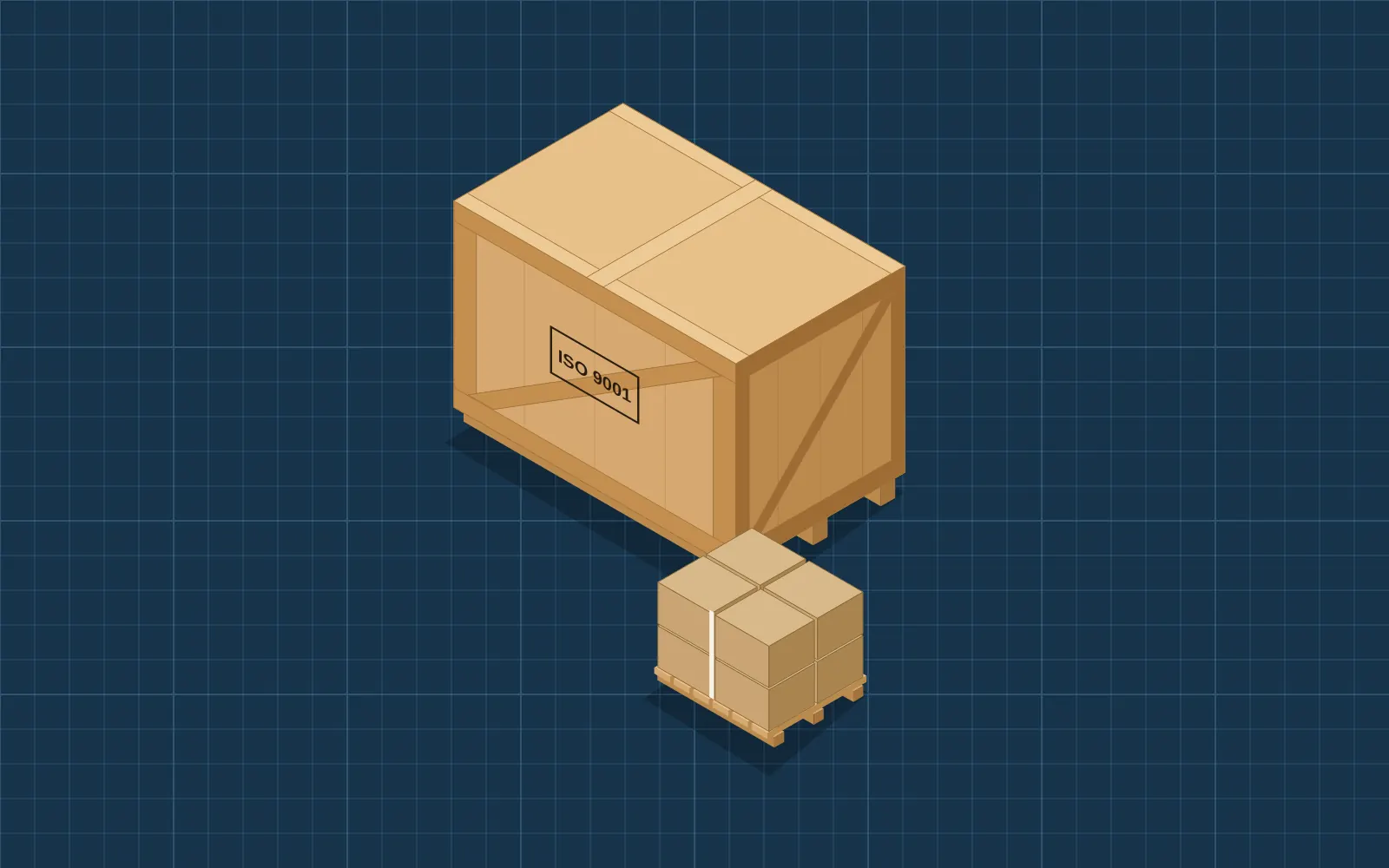
Crates Manufacturer is ISO 9001 certified and C-TPAT compliant, and builds to ISPM-15, MIL-STD-2073, MIL-STD-129 and ASTM requirements for export and defense shipments.
Learn more →Send dimensions, weight, photos and destination. We'll recommend the right crate and send a quote.