

Custom inserts and restraints for fragile equipment
Foam selected and cut for your product's weight and fragility, so it stays put and absorbs the shocks of handling and transport.
What are foam and cushioning systems in packaging?
Foam and cushioning systems are custom-cut foam inserts, pads, corner blocks and trays that hold a product in place and absorb shock and vibration during shipping. The foam type, density and thickness are chosen for the product's weight and fragility so the cushion compresses enough to protect it without bottoming out.
Foam is not one material. Too stiff, and shocks pass straight to the product. Too soft, and the product sinks through the foam and hits the crate wall. The right cushion depends on the product's weight, the area of foam supporting it, the drop height it is likely to see and how fragile it is. We use those inputs, and testing when needed, to choose foam that actually protects.
| Foam | Characteristics | Typical uses |
|---|---|---|
| Polyethylene (PE) | Closed-cell, firm, resilient, moisture resistant | Heavy parts, tools, industrial components, repeated use |
| Polyurethane (PU) | Open-cell, soft, conforming | Lightweight, delicate electronics and instruments |
| Cross-linked PE | Fine cell, clean, smooth finish | Medical, cleanroom and high-end presentation cases |
| Anti-static foam | Dissipative or conductive | Circuit boards and ESD-sensitive electronics |
| Foam-in-place / engineered isolators | Molded or mount-based | Very heavy or irregular items, vibration isolation |
We measure the product or work from your CAD file.
We estimate static loading and fragility to choose foam density and thickness.
Inserts are cut by hand for one-offs or by CNC foam cutting for precision and repeat orders.
For new programs we can confirm performance with drop, vibration and impact testing.
Lab instruments, medical devices, circuit boards and servers, optics, aerospace components, molds and tooling, art objects, audio and lighting gear, and spare parts kits. See medical device and consumer electronics packaging.
Most electronics ship well in polyurethane or cross-linked polyethylene, with anti-static foam for exposed circuit boards. The right density depends on the device's weight and fragility.
Polyethylene foam is resilient and commonly reused in returnable cases and crates. Polyurethane foam is softer and better suited to fewer cycles.
Thickness depends on the expected drop height, the product's weight and fragility, and the foam type. Typical industrial inserts use 1 to 4 inches of foam on each side, but we calculate it for each product.
Yes. We cut foam for wood crates, plastic cases, road cases, corrugated boxes and customer-supplied containers.
Yes. We can import CAD files to design and CNC cut cavities that fit the exact geometry of your product.
There is no strict minimum. We cut single inserts for one-off shipments and produce larger runs for recurring programs.
Closed-cell polyethylene foam resists moisture and is a good choice for ocean shipments, especially combined with barrier bags and desiccant.
Send photos, dimensions, weight and the destination. We confirm handling points, fragility and any export or spec requirements.
We size the crate, choose lumber, plywood, foam and barrier materials, and plan blocking, bracing and skids around the load.
The crate is cut and assembled in our shop or at your dock, with fit checks, fastener and skid sizing matched to the weight.
Your item is secured, sealed, marked and documented, then handed to your carrier, delivered locally or stored.

Precision-cut foam inserts, trays and liners from your CAD files.
Learn more →

Custom-cushioned crates for instruments, electronics and art.
Learn more →
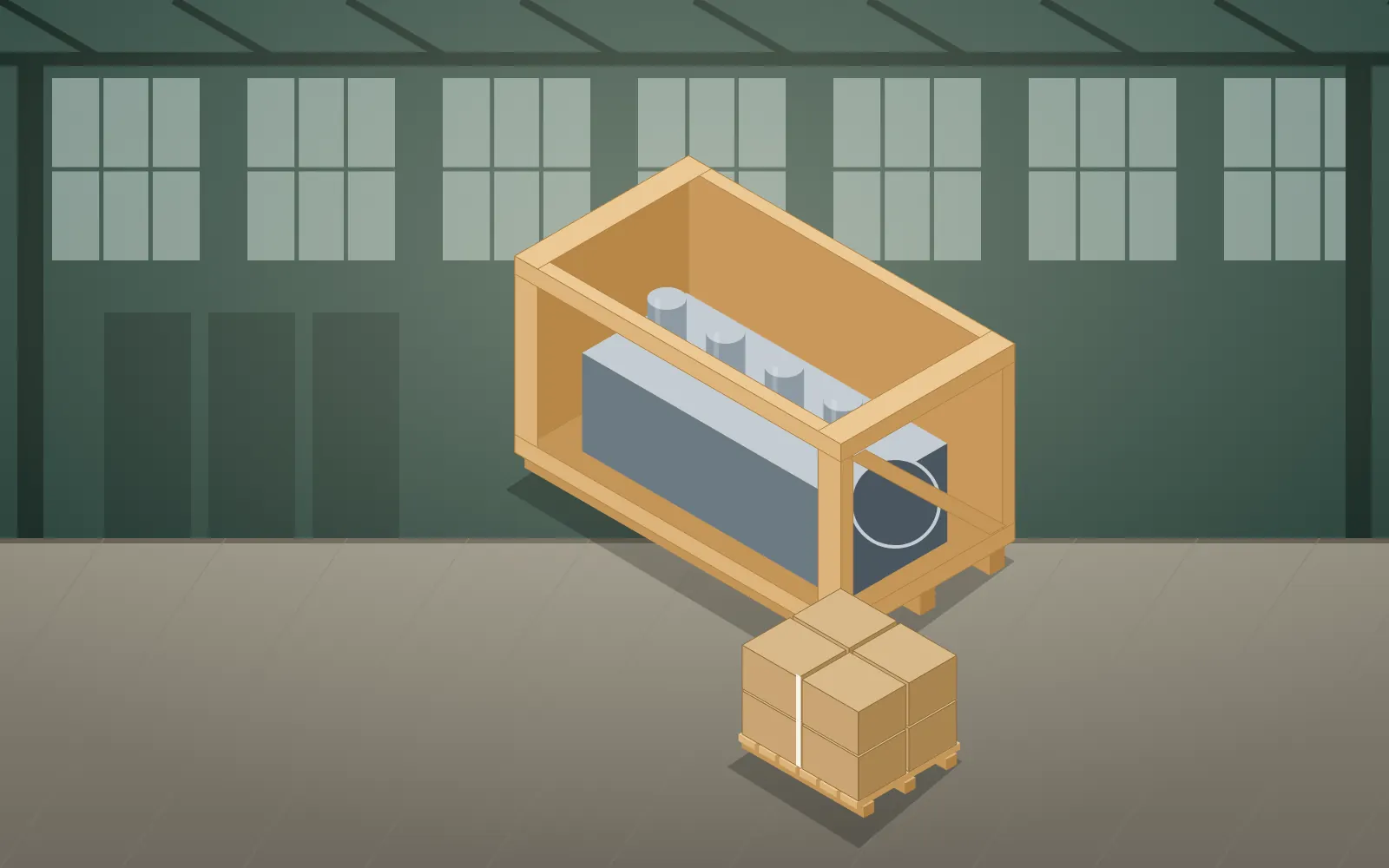
Load securement that locks equipment in place inside crates, trailers and containers.
Learn more →
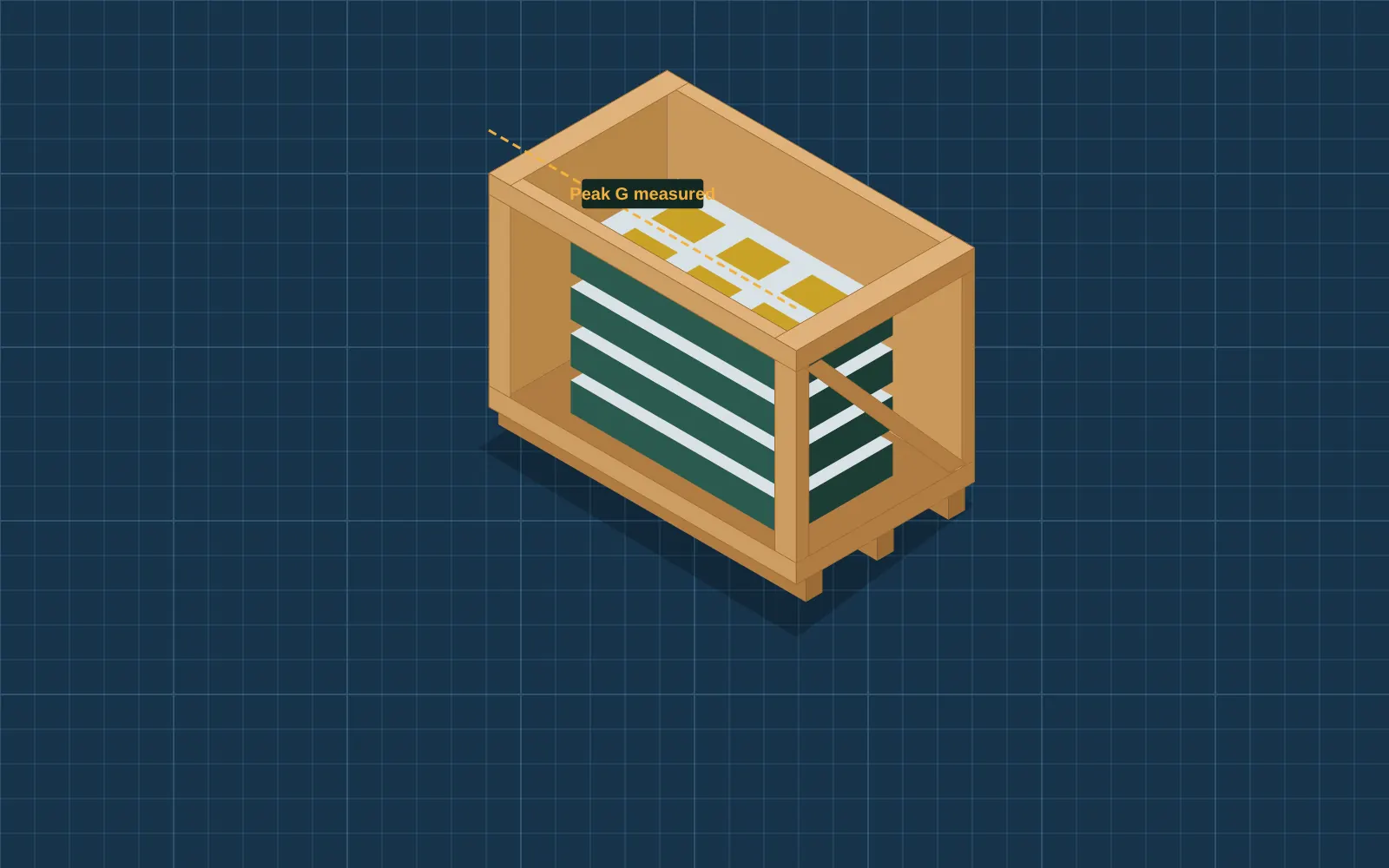
Accelerometer-based testing that validates packaging before shipping.
Learn more →

Protective crating for medical device manufacturers in DFW: imaging systems, surgical robots, diagnostic equipment and components, with foam isolation and testing.
Learn more →
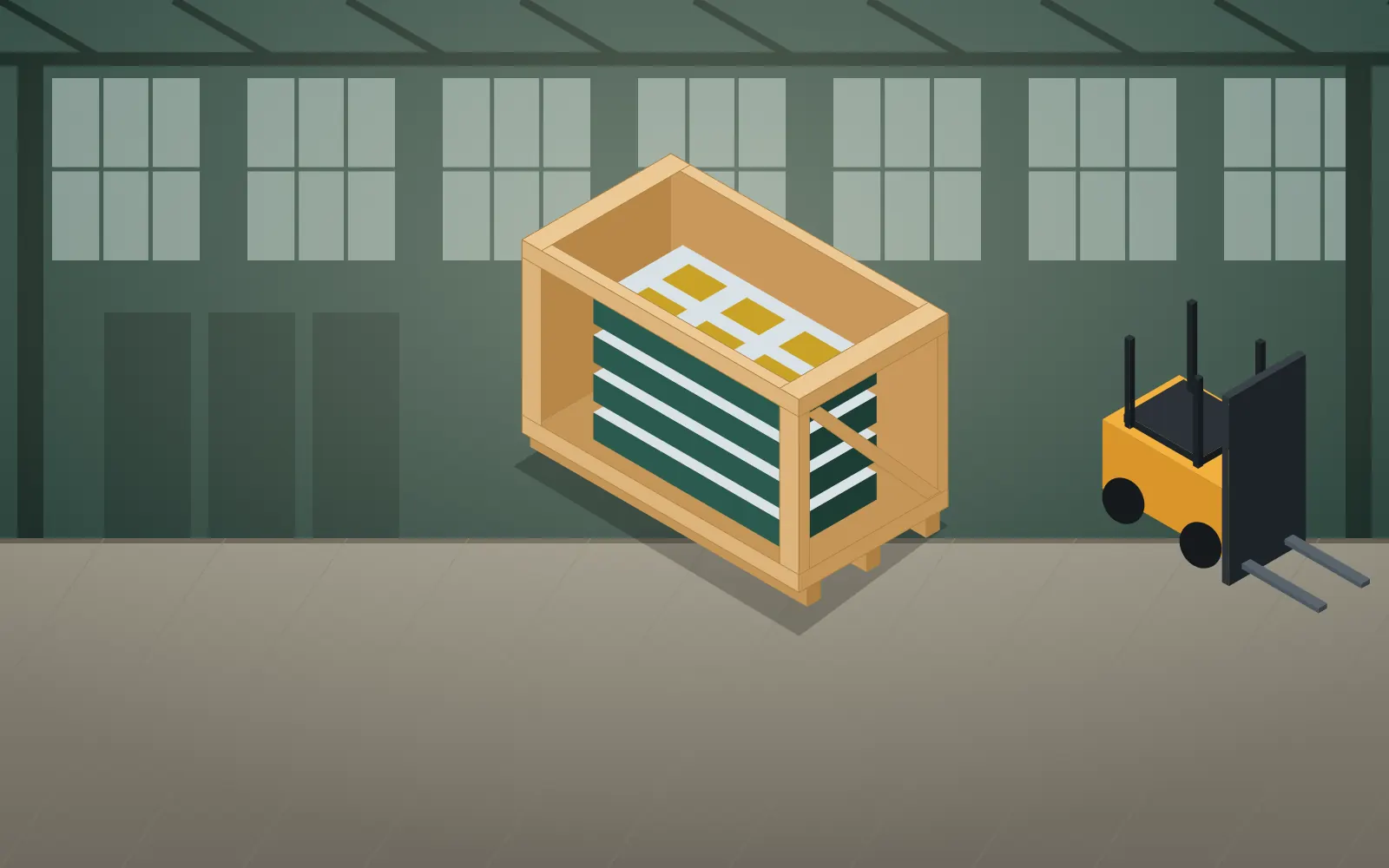
Protective packaging for electronics manufacturers in Dallas–Fort Worth: ESD-safe foam, production equipment crating, test fixtures and returnable packaging programs.
Learn more →Send dimensions, weight, photos and destination. We'll recommend the right crate and send a quote.